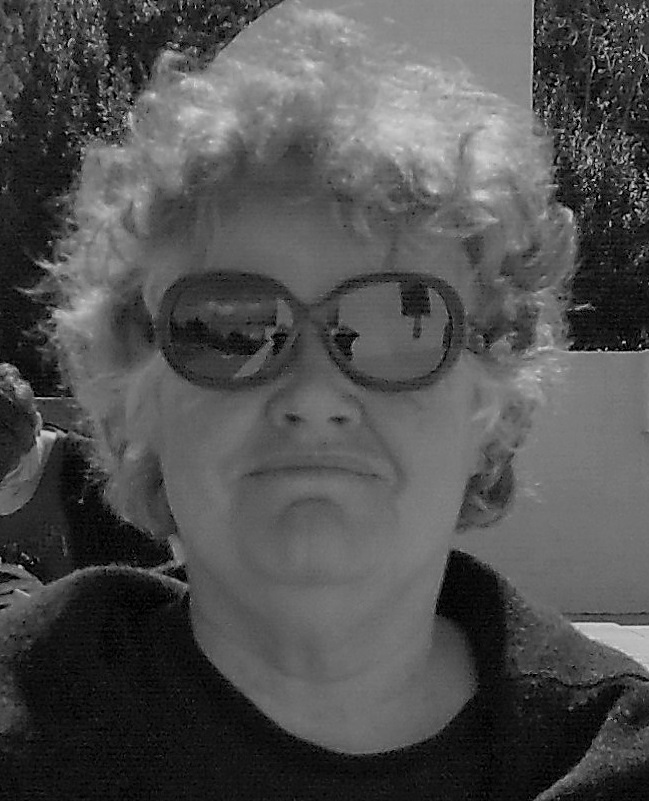
History is replete with persons who contributed to its making, and those who enjoyed a ringside seat of experiencing all that was unfolding. Lady Pamela Carmen Louise Hicks (nee Mountbatten) belongs to the latter. As the younger daughter of Lord Louis Mountbatten and Lady Edwina Mountbatten, she lived through numerous historic moments, throughout her life, but in particular, during her early formative years. Born in Madrid, Spain on 19 April 1929, Pamela was baptized two months later in the Royal Chapel at St James Palace, and had amongst her many godparents, King Alphonso XIII, the then King of Spain.
With the outbreak of the Second World War, Pamela and her sister Patricia were sent to the United States of America. However, her life took a drastic turn in 1947, with two particularly significant events – a new home in India and a family wedding in the United Kingdom. Both these events would have an extraordinary impact on the young girl, as she experienced firsthand, much that unfolded in both countries at that period of time.
A new home in India
The first, was her new home, in India, which was a considerable distance from the environs she had been used to and grownup in. Her father of course was no stranger to South Asia having lived in Ceylon in the early 1940s at the height of the Second World War, when he was the Supreme Allied Commander of South East Asia. Her passage to India in February 1947, was owing to her parents being tasked with a new responsibility at the last stages of the colonial period in that country. A 17-year-old Pamela joined her parents on what would be a very adventurous trip to the subcontinent, with which connections would remain for years to come. Her daughter, India Hicks reflects that “The moment she arrived in India at the tender age of 17, following her parents who had been appointed as the last Viceroy and Vicereine, she was put to work in the medical camps just outside Delhi. This led to a lifelong involvement with charitable organisations - and to me being aware from an early age that ‘from whom much is given much is expected’.”
Her father’s term as Viceroy ended at the dawn of India’s independence in August 1947, and thereafter, he was appointed the first Governor-General on the Union of India, serving till 21 June 1948. Yet her association with India would continue. Prior to her father’s term ending, Pamela had been appointed as Assistant to Major General Thomas Wynford Rees, the head of the Military Committee of the Indian Emergency Cabinet. She had access to some of the most sensitive information of that time, as the partition was unfolding, leading to the creation of Pakistan and independence of India. She also served for a brief period as Secretary to V. K. Krishna Menon, following his appointment as India’s High Commissioner in London, widening her knowledge and understanding of India in that post-independence period.
Although young in years, Pamela’s work and enterprising nature had seen her engaging with many leaders, including Mahathma Gandhi with whom she had meditated, and the first Prime Minister of India, Jawaharlal Nehru, who would even write lengthy letter to the younger daughter of the Mountbattens. His association with the Mountbatten family has been extensively discussed, especially his closeness friendship with her mother, Lady Edwina Mountbatten, yet the trouble he took to write to young Pamela, long after she had left India and returned to London, was significant.
In one letter, preserved in the Nehru Archive, he writes to her about a short story she had given him for his views. “I liked reading it, and I think that it is very well written. It flows on smoothly without any padding. The reader becomes more and more interested in Neola and to some extent, of course, in the girl and her reactions to Neola. Thus, it becomes a live story which leaves an impression and a memory after reading it. Looked at from the point of view of an animal story, it is good, as it shows a great deal of intimate observation. I doubt if any expert zoologists have observed a Neola so carefully and noted its characteristics. Thus, your story has a certain scientific value.” He goes onto encourage her writing abilities noting that “I think it is so good that you are sure to find a periodical which will publish it. You must go ahead with this and you must also write some more.”
Nehru goes on to refer to a dinner the night before, at which he was joined by her mother, and an American singer and actress, Eartha Mae Kitt, and confiding in Pamela, he writes that “I am afraid that I was not terribly impressed in any way by the lady. It is not fair for me to judge her because I have not seen her performing. But I did not see anything terribly attractive or exciting about her.”
A month after Pamela Mountbatten married David Hicks in January 1960, her mother Lady Edwina Mountbatten died. The Indian Prime Minister’s sister, Vijay Lakshmi Pandit, serving at the time as India’s High Commissioner in London, wrote to her brother ahead of his visit to the United Kingdom stating that “He (Lord Mountbatten) clings to those who knew and loved Edwina. So, I have come to realise that he is very anxious that you should go to Broadlands. I know that a visit by you will help him and also Patricia and Pammy very much.” The closeness of these families was evident, well beyond their years of association in India, and ‘Pammy’ as Pamela Mountbatten is fondly referred to, cherished her time in India, even naming her youngest daughter after the country.
She would return to India many times, with her mother, husband or on her own, and most often stayed with Prime Minister Nehru. One of those visits with her mother was in the first quarter of 1959, when they travelled to various parts of the country. For Nehru however, the moment that stood out the most, and about which he wrote to Lord Mountbatten, “This afternoon I did something which I had been thinking of for the last ten years or more. Edwina and Pammy took me right up the great dome of Rashtrapati Bhavan and we looked at the city of Delhi spread out before us on all sides. It has grown greatly.”
Pamela’s connection to India was due initially to her accompanying her parents in 1947, but the strength of the relationship was evident just a year later when, Nehru acknowledged her in his farewell speech to the Mountbattens in June 1948, when he stated that “She came here straight from school, and possessing all the charm she does, she did a grown-up person’s work in this troubled scene of India. I do not know if all of you who are present here know the work she has done, but those who do know well how splendid that has been and how much it is appreciated.”
In the first two decades of the 21st century, the passion for writing, so carefully nurtured in her youth, as well as the exotic places and intriguing personalities she met across India, resulted in the publication of two particularly significant books - ‘India Remembered: A Personal Account of the Mountbattens During the Transfer of Power’ which was co-authored with her daughter, India, and published in 2007, and the second, ‘Daughter of Empire: Life as a Mountbatten’ which was released in 2014.
Closer to the Royal Family
The other significant development of 1947, was when her father’s sister’s son, Philip Mountbatten, married Princess Elizabeth, the heir to the British throne, on 20 November 1947. A young Pamela Mountbatten, who returned briefly from India, was one of the eight bridesmaids attending to the young princess at this wedding. Although their friendship extended to her younger days, even before the marriage, they would remain close over the years as Pamela was made a Lady-in-Waiting to the princess and thereafter continued in this position, when Elizabeth became Queen.
In 1952, when Princess Elizabeth was in Kenya on the first leg of a Commonwealth tour that would have also taken her to Australia, New Zealand and Ceylon, her father King George VI passed away. Lady Pamela Hicks, who was traveling with her, was present at Treetops Hotel, in Kenya’s Aberdare National Park, witnessing Princess Elizabeth becoming Queen Elizabeth.
When the postponed 1952 royal tour commenced at the end of 1953 and flowed into the next year, the royal couple, visited Ceylon in April 1954, and Pamela Mountbatten was Lady-in-Waiting to the Queen. She has been photographed at several events during the royal visit, the most notable being the opening of Parliament, which took place at the Independence Memorial Hall in Colombo.
Lady Pamela Hicks, served the Queen for many decades, travelling with her across the United Kingdom, and also to many countries, as she supported her longstanding friend, relative and sovereign. She was even seen at her funeral in September 2022, when an era ended, and the world that Pamela had grown-up in and known so well was gradually coming to a close. She had enjoyed the thrills of life, known kings and prime ministers, toured extensively, gained immense knowledge, and yet had also endured personal tragedy as when her mother passed away in her sleep in Malaysia in 1960, and when her father was assassinated on 27 August 1979 in Mullaghmore, Ireland by the Provisional Irish Republican Army. Her father had been in his fishing boat, with his eldest daughter, Patricia, her husband, John Knatchbull, their twin sons, and his daughter’s mother-in-law. The bomb claimed the lives of the last viceroy of India, one of his grandsons, the child’s grandmother and a boat assistant.
Following the death of her own husband, David Hicks on 29 March 1998, Lady Pamela Hicks continued to make the most of the years ahead of her. As her daughter India Hicks, in announcing her mother’s passing noted, “through the prism of a crowded and remarkable past, she made incomparable company, carrying her memories lightly, and always with humour. My mother maintained right up to the end, the impeccable style, sharp mind, and effortless charm that made her not only a cherished institution, but truly the last of her kind.”
The death of Pamela Carmen Louise Hicks (nee Mountbatten) on 5 June 2026 has seen the closure of yet another window into a past, that saw so much, meant so much and yet remains much of a mystery to many, especially in South Asia.
ly the last of her kind.”
This article is part of 'The Window Series'
Friday, June 5, 2026
LADY PAMELA HICKS AND INDIA: A REFLECTION
Friday, May 22, 2026
DISCOVERING ANGLO SAXON LITERATURE
Anglo-Saxon literature is basically Old English literature, originating in the 5th century AD with the arrival of Germanic tribes, which are Anglo, Saxon and Judas, in Britain - specifically, right after the Roman withdrawal from Britain in 410 AD, with the fall of the West Roman Empire. The Anglo-Saxon era existed from 410 AD to 1066 AD. Before the Anglo-Saxon invasion of Britain, the Celtic tribes already inhabited the island of Britain, and were known as ancient Britons, which later shifted to British.
Anglo-Saxon literature consists of great poems and riddles, which were not written down till later in the 6th century; therefore, most of them were carried across generations through oral transmission. With Christianization in the 6th century, the written manuscripts were introduced, and Anglo-Saxon literature, which was transmitted orally, began to be written down. Many such manuscripts were written in Latin, which gained visibility in Western Culture. The great pieces of Anglo-Saxon literature are the famous Beowulf Manuscript, The Battle of Maldon, The Wanderer, The Seafarer, The Wife’s Lament, Waldhere, Deor and more. Most of the work can be categorised into Heroic epic, Religious Poetry, Elegiac Poetry, which are those poems that express sorrow, and those with a historical context. Importantly, most of these poems remain anonymous.
During the Anglo-Saxon period, there were constant attacks by Vikings who destroyed most of the Anglo-Saxon literature, which was later restored by King Alfred of England. Therefore, when reminiscing about the Anglo-Saxon period, one cannot ignore the role of King Alfred, who contributed to preserving Anglo-Saxon literature and encouraged the learning of English. One such prominent book is ‘Anglo-Saxon Chronicles’, created during the reign of King Alfred the Great in the 9th century. It was distributed across the monasteries in England, and consists of four volumes of Old English poetry from this era.
An extract taken from the translation of the epic Beowulf, a heroic warrior who killed the ‘Grendel the monster’ and rescued Hrothgar, the king of the Danes and his kingdom, reads:
“Hrothgar answered, helm of the Scyldings:
“I remember this man as the merest of striplings. His father long dead now was Ecgtheow titled, Him Hrethel the Geatman granted at home his One only daughter; his battle-brave son Is come but now, sought a trustworthy friend. Seafaring sailors asserted it then, Who valuable gift-gems of the Geatmen carried As peace-offering thither, that he thirty men’s grapple Has in his hand, the hero-in-battle."
This short extract explains how Hrothgar, the king of the Danes, introduces Beowulf, the warrior, and amused by his entrance, says he has the strength of 30 men. The manner in the storytelling unfolds is really captivating. This is one of the longest works of Anglo-Saxon literature. It says that the original Anglo-Saxon work is much closer to German than English, and some also argue that this falls into a category of prose. This is an early poem of the emergence of ‘England’ which was printed by an Icelandic-Danish scholar, Thorkelin, in 1815. And if you're into good old riddles, ‘The Exeter’ it is, that you should read! It is known as one of the jewels in the crown of Anglo-Saxon Literature (10 Works of Anglo-Saxon Literature Everyone Should Read, 2025).
One of the fascinating aspects is that ‘Women in the Anglo-Saxon period held a surprising degree of independence, including the right to own and bequeath property’, and I hope that would be something you look for. There were military leaders, queens, witches, and murderesses who consumed the utmost power and influence during that period.
A young woman must always be
stern, hard-of-heart, unmoved, full of belief,
enduring breast-cares, suppressing her own feelings. She must always appear cheerful,
even in a tumult of grief.
(An extract from ‘The wife’s lament’ found in the book ‘The Exeter’. Perhaps the oldest feminist poems, as there are many interpretations)
This is just glance at the greatness of Anglo-Saxon literature. The more you read about it, the more you find how amusing the poetry is. If you hop onto the internet, there are tons of articles and sites that you can learn about the Anglo-Saxon Period. Anglo-Saxon literature is an area one should definitely look into, as it takes you on an adventurous journey to the early roots of English literature. Hope this article is an inspiration for that.
(The interest for this article was evoked at a lecture at Westminster House, Colombo, where Malcolm Godden, FBA, formerly Rawlinson and Bosworth Professor of Anglo-Saxon at the University of Oxford, spoke on ‘The Anglo-Saxons: Their Writings, Their Stories and Their Status in Modern Times’. Appreciation is due to the British High Commission in Colombo, the British Council and the Awarelogue Asian Institute)
Saturday, July 2, 2022
RUSSIA OVERSHADOWS G7 2022 SUMMIT
GUEST COMMENTARY by Banura Nandathilake
Despite being an informal collective of ‘advanced economic’ liberal democratic states, the Group of 7 (G7) bringing together Canada, France, Germany, Italy, Japan and the United Kingdom and the United States have fervent goals. Held from 26 to 28 June 2022, the summit was in response to a global society capsized by division and shocks, as a call to unite and join to defend ‘universal human rights and democratic values, the rules-based multilateral order, and the resilience of democratic societies’ (G7, 2022). The viability of such remains to be seen.
Formed in 1975, leading states in a world of global economic recession induced by the OPEC oil embargo understood it may be in their mutual interest to coordinate on macroeconomic interdependencies. While it was first a forum for Finance ministers to hold annual meetings, the G7 developed into a round-table between leaders of the Western World. In 1988, Russia joined the G7, which was then named the G8 albeit temporarily until Russia’s dismissal for its annexation of Crimea from Ukraine.
The G7 states in the contemporary, with an aggregate that represents 45 percent of the global economy in nominal terms and 10% of the world’s population, hold annual summits to coordinate economic policy goals, facilitate collective action on transnational issues and propagate neo liberal norms, in conjunction with the European Union and other invitees. All 7 member states are identified as mature and advanced democracies with a Human Development Index score of 0.800 or higher.
Unlike international organisations and groups such as NATO, the G7 group has no formal legal existence, no permanent secretariat or official members. It thus has no legally binding rules that abide by or ratify states to uphold decisions and commitments made at G7 meetings. As such, while compliance with G7 norms is procedurally voluntary, they are impacted by social norms of persuasion, influence, mutual accountability and reputation. Topics of conversation between member states have encompassed growing challenges such as counterterrorism, development, education, health, human rights and climate change.
The 2022 Summit
From
26-28 June 2022, the leaders of G7 States met in Elmau, Germany joined by the
leaders of Argentina, India, Indonesia, Senegal and South Africa, as well as
Ukraine. Representatives included German Chancellor Olaf Scholz, Italian Prime
Minister Mario Draghi, US President Joe Biden, British Prime Minister Boris
Johnson, Canadian Prime Minister Justin Trudeau, Japanese Prime Minister Fumio
Kishida, French President Emmanuel Macron, European Council President Charles
Michel and European Commission President Ursula von der Leyen,
The
summit focused on the Covid-19 crisis, climate change, the Russian Ukrainian
conflict, and China.
Climate Change
The
shared concerns of climate change were a major topic of discussion during the
2022 Summit. The group endorsed the goals of an open and cooperative
international Climate Club, in alignment with the 1.5°C pathways and hastened
the implementation of the Paris agreement. The group further pledged to commit
to a decarbonised transportation sector by 2030, a fully or predominantly
decarbonised power sector by 2035. However, the latter may have been
incentivised by political concerns of Western states to a major degree.
Liberal Democracies of the West
Liberal
democracies may be understood to exist where the state subscribes to a liberal
economic system and a democratic political system. A concise summary of such is
as a liberal economic system proscribes significant political control over an
decentralised, capitalistic, market driven economic system, as it is understood
that the market mechanism is the most efficient means of linking demand to
supply, market to consumer. A democracy may be understood as a domestic
political model which, in conjunction with an impartial judiciary, free media
and others, elected representatives aim to promote a decentralised
representative governance through accountable, transparent and inclusive
institutions.
By virtue of being a liberal democracy, all member states find common ground, parallel norms, alignment of macro foreign policy goals and understanding with each other. This allows the informal G7 to coordinate hard power security and economic interdependence in addition to cooperating with civil society groups to promote human rights, and uphold a democratic zone of peace in the face of non-democratic powers. A strong culture of mutual accountability exists between G7 states. Accountability may be through internal processors of the forum, where social norms allow for persuasion and disincentivize coercion. Coercion may not at all be necessary, as liberal democratic states would all be of a positive sum world view. Furthermore, the level of trade interdependence between states would act as means of checks and balances, as every state is needed by the other, thus it is in every G7 state’s interest to be in their good books.
The Illiberal Rest
Russia
and China, in addition to states such as Iran, Saudi Arabia and Venezuela are
understood by the West to be illiberal states. Both major powers, albeit one a
receding power, have capitalist and liberal economic systems where the state’s
political machine exerts a heavy pressure on the market mechanism. While the
state may be able to provide a higher quality safety net to its citizens by
restraining the destructive forces of capitalism to better allocate scarce
resources amongst the vulnerable, significant barriers to such exist. China’s
GDP has grown at a surprising rate vis a vis other developing states, which has
allowed the CCP significant geopolitical leverage. However, China’s domestic
political model is authoritarian, whereby citizens do not have much say in how
they are governed. Exclusive political institutions have no means of
accountability or transparency, which leads to significant corruption. As
Wedeman (2004) analyses, corruption is a feature of the Chinese system, thereby
stifling economic and social growth. Corruption and lack of domestic checks and
balances to those in power may be more apparent in Russia than China, where the
control of the Kremlin and the Oligarchs have poignant effects on not just its
citizens but also its neighbours; as the lack of domestic accountability may
mean the lack of stringent checks balances, which then mean lesser shackles on
the zero-sum ambitions.
Russia-Ukraine Conflict
The
Russia-Ukraine conflict may be interpreted as a conflict between the forces of
liberal democratic values of positive peace, pluralism and self-determination
versus a one man’s nostalgic dreams of a ‘Neo’ USSR. Being at complete odds,
the reaffirmed condemnation of Russia’s ‘’illegal and unjustifiable war of
aggression against Ukraine’’ by the liberal democratic G7 states is hardly a
surprise. Nor is their promise of ‘’needed financial, humanitarian, military,
and diplomatic support’’ for Ukraine in its defence of its sovereignty, during
its path on a free and democratic society.
The Sanctions Regime
Sanctions
and more sanctions were promised by the group of seven advanced economies, who
vowed to “align and expand targeted sanctions to further restrict Russia’’ in
its access to key technological industrial imports and services. Such a move
would severely restrict the ability to sustain their war machine thereby
adhering to security commitments to Ukraine. The G7 Leaders pledged new
sanctions on Russians who had committed war crimes in Ukraine, and are
contributing to exacerbating “global food insecurity” by “stealing and
exporting Ukrainian grain”. New penalties on Russian gold exports were further
proposed, as well as a cap on the oil price to phase out global dependency on
Russian energy.
However, a complete restriction of the import of Russian energy may be an ambitious task. European nations such as France get a quarter of their oil and 40% of their gas from Russia. While Germany has halted the progress of the controversial Nord Stream 2 pipeline, the EU has currently agreed to reduce its Russian gas imports by only two-thirds. President Biden however is banning all Russian oil and gas imports to the US, and the UK is ready to phase out Russian oil by the end of the year. The US, UK and Ukrainian Leaders are keen for other G7 nations to follow suit.
Ukraine's President Volodymyr Zelenskyy, who joined in on a trio of meetings via Videolink, stated that the summit will show "who is our friend, who is our partner and who sold us out and betrayed us". He reiterated his calls for fresh deliveries of weaponry, as he believes Russia will want to extend the war until winter wherein they could make new territorial gains to consolidate power. The financial support of G7 allies in 2022 already amounts to more than USD 2.8 billion in humanitarian aid, and a further USD 29.5 billion is pledged in supporting Ukrainian reconstruction.
China and the BRI
A
growing China poses a “threefold threat” to G7 countries — economically,
ideologically, and geopolitically. China’s GDP is second only to the US and it
is fast catching up. China’s growing state-overseen tech industry, fuelled by
globalisation and interdependence, is fast spreading a culture of surveillance
and censorship, which act as means for the globalisation of authoritarianism.
Said authoritarian ideals are further spread through Chinese geopolitical
projects and alliances such as the BRI, which usually focus on developing,
quasi democratic states with little to no accountability such as those in
Africa and Central Asia. Furthermore, China’s action with regard to the Uyghurs
in the Xinjiang region and its influence in Hong Kong have drawn condemnation
from G7 members. China’s growing trade and defence ties with Russia have also
caused concerns.
A
Western counter to the BRI emerged during the G7 summit, aptly named
Partnership for Global Infrastructure and Investment. The BRI is a global
infrastructure development strategy which was developed as per Chinese leader
Xi Jinping's vision in 2013, as a means for China to assume a greater role in
global politics by easing access to China and its capabilities and boosting
global GDP. Dubbed the Belt and Road Initiative and with over 145 countries
signed up, the BRI is currently constructing a network of overland routes, rail
transportation, sea lanes and energy pipelines to connect China to Southeast
Asia, Central and South Asia, the Middle East, Europe and Africa. However, the
project has been criticised as a tool to increase China’s political leverage in
developing countries. Thereby, the BRI has been criticised for neocolonialism,
economic imperialism.
In such a context, the G7 had launched a $600bn Build Back Better World (B3W) initiative infrastructure plan to counter China, in private and public funds to finance infrastructure in developing low and middle-income countries over five years. By working to narrow the global investment gap, the B3W would create new Just Energy Transition Partnerships with Indonesia, India, Senegal and Vietnam, building on existing partnerships with South Africa.
While US President Biden understood that “Developing countries often lack the essential infrastructure to help navigate global shocks (thus) feel the impacts … and they have a harder time recovering,” he stressed that the B3W “isn’t aid or charity. It’s an investment that will deliver returns for everyone”. Despite being dwarfed in comparison to the multi-trillion-dollar BRI, the B3W offers means of accountability, transparency and mutual trust between the neo liberal developed states and the developing states. The initiative would, according to Biden, further allow developing states to “see the concrete benefits of partnering with democracies”. While a cynic may argue that the developed have no interest in the developing other than exploitation and/or self-interest, and such may be observed to be true, President Biden may have been right when he said that underdevelopment is “not just a humanitarian concern, but an economic and a security concern for all”.
Mutual
gains depend on interdependence, and without developing countries, there cannot
be any sustainable recovery of the world economy. However, the development of
low-income states is necessary but insufficient for a holistic global economic
recovery, which remains shadowed by the conflict of value systems: liberal and
illiberal, democratic and authoritarian.
Tuesday, August 31, 2021
COMPLEXITIES OF GOVERNANCE AND POLICY: 90th Anniversary of Universal Franchise in Sri Lanka
Lecture delivered by Dr Jane Russell, Historian, at the inaugural Awarelogue Lecture Forum of the Awarelogue Initiative to mark the landmark of Universal Franchise in Sri Lanka
I am greatly honoured to be asked by the Awarelogue
Initiative to speak at their Lecture Forum in this year of 2021, celebrating the
90th anniversary of the advent of universal franchise in Sri Lanka. In my
lecture, I shall touch on some of the complex problems of governance and policy
faced by a small multi-ethnic island, flanked as it is and always has been, by economic
and political superpowers
Today, I want to briefly revisit the grant (and in using that word I have already encountered a problem, one that I shall look at later) of universal franchise to Sri Lanka, then called Ceylon, 9 decades ago. But I am not so much interested in Ceylon’s perspective of getting universal franchise, as I covered that ground in my book written over 40 years ago. As an activist historian, I am now more interested in the motives of the British overlords, in particular the Colonial Office during the 1927-1931 period, in giving Ceylon universal franchise. Why did the Colonial Office send out those particular Donoughmore Commissioners? Why did the Donoughmore Commission decide that universal franchise and the Executive Committee system of government was the most appropriate to foster successful self-government in Sri Lanka? Why did the Commission even want to foster democracy and self-government in an imperial dependency? These are the questions I shall try to answer.
I should also like to make one disclaimer: in this brief lecture, I use the terms Ceylon, British Ceylon and Sri Lanka almost interchangeably. There is some vague method to my usage, based loosely on the date 1948, although that is in itself arbitrary, as it was in January 1973, when I first arrived in the island to take up a Commonwealth Scholarship at Peradeniya that Sri Lanka, the name of the new Republic, came into existence. If you find it at all confusing, I apologise in advance but I would ask you to bear with it – in the end it is the island of Lanka, Taprobane, Serendib, that I am talking about and no other!
First, I want to make it clear in discussing universal franchise as the basis for democracy that I am in complete agreement with wartime British Prime Minister, Winston Churchill, who stated in 1947 at the end of the last global war that “Many forms of Government have been tried, and will be tried in this world of sin and woe. No one pretends that democracy is perfect or all-wise. Indeed it has been said that democracy is the worst form of Government - except for all those other forms that have been tried from time to time.…’
Democracy is (and I quote here from the Merriam-Webster American
English dictionary) “government
by the people especially a). rule of the majority and b). a government in which
the supreme power is vested in the people and exercised by them directly or
indirectly through a system of representation, usually involving periodically
held free elections.”
This otherwise acceptable definition
is strangely wanting in one respect: it does not specify who the ‘people’ are: that
is it does not state the criteria for deciding who may be eligible to vote.
Nowhere does it specify the age, race, the language, birthplace, religion,
gender, the sexual preference, educational standard, wealth and property, skin
colour, or indeed any other discriminator determining who can vote in an election.
From the turn of the 21st
century, the USA, which has long prided itself on its democratic norms and
indeed paraded its democratic institutions as a model for other countries to
follow, has come up against powerful geo-economic and political forces that do
not recognize democracy as a particularly valid form of government and
certainly not one that trumps their own
forms of governance. Whether those
challenging the primacy of democracy are from one-party states or one-person
dictatorships or indeed violent anti-establishment Islamic religious movements
like the Taliban, Islamic State or Boko Haram, these challenges are undermining
US confidence in its democratic exceptionalism to the point where it is finding
that its earlier, easy accommodation with elections and voting now under threat
internally from anti-democratic proto-authoritarians like Donald Trump. The US political
culture is now faced with the dilemma, which covertly has always dogged its
democratic credentials, of deciding whether non-white members of its populace,
and more specifically the black and/or mixed descendants of formerly enslaved
peoples have a right to vote equal to those who consider themselves ‘truer
Americans’ because of their paler skin colour and non-slave background.
Another reason I chose the
Merriam Webster definition of democracy is because it baldly states that
democracy is government based on rule by the majority. And this is where Sri
Lanka’s ninety year experience of universal franchise becomes so historically valuable.
When the Donoughmore
Commissioners came to British Ceylon in 1928, they were acutely aware that the political
turbulence caused by the October 1917 revolution in Russia had changed the
world forever. The Commissioners came to
Ceylon from a Britain where the more left-wing representatives in parliament
and government had already started to realise that the political and economic costs
of maintaining Empire were escalating to a point where it was becoming more
rational to let Empire go rather than try to hang on to it.
An Edinburgh trained medic,
and holder of the Military Cross, Dr. Thomas Drummond Shiels was appointed as a
Donoughmore Commissioner by the newly-appointed Secretary of State for the
Colonies Sydney Webb, who’d just been brought into front-line politics by being
made a peer, (Lord Passfield) by the Labour Party, who were in government in
Britain, in a coalition with the Liberals, for the very first time.
Webb was a neo-marxist and a
great admirer of the Soviet Union. He knew Drummond-Shiels, his fellow-travelling
Marxist and equally fierce anti-imperialist, would definitely become the intellectual
driving force behind the Commission, which had been tasked to find a new
constitutional settlement for British Ceylon. Privately, Drummond-Shiels was instructed
by Webb to use this opportunity to find some constitutional process, an
institutional mechanism, which would serve as a precedent, and so allow the government
in London to dispose of their imperial possessions and responsibilities in a manner
both politically practicable and ethical but also as timely as possible.
Ceylon was therefore chosen to
be a laboratory for an experiment in ‘not-quite but almost’ self-government: a
self-government which would lead, not to outright independence, but Dominion
Status, the same status accorded within the Empire to Australia, New Zealand,
Canada and South Africa, ie. the white dominions. And here we can see the white
supremacist basis which underpinned the British Empire and which would
inevitably lead to its demise - a demise which neo-marxist politicians in
Britain in the 1930’s could clearly envision, though without discerning how it might
happen.
It seems that Ceylon was considered the perfect vehicle for this attempt at 7/10ths self-government - so-called because 3 British colonial civil servants sitting in the Colombo parliament, or State Council, served as Ministers of Finance, Foreign Affairs and Internal Security, while all other Ministerial posts were given to elected State Councillors. But why did the leftists in the Colonial Office think Ceylon so well suited for democratic development? Well, for one British Ceylon was insulated from the influence of India and its other south and south-east Asian neighbours by its Crown Colony status.
Please allow me to digress a little here and explain something about Crown Colonies. These were special entities within the Empire; they were usually small islands,- Hong Kong, Bermuda, Jamaica, the Falklands for example - but Ceylon was considered the Premier Crown Colony. Why? Well, it was wealthy from the trade of its tea, rubber and coconut plantations; it had a two and a half thousand year plus history of Buddhist civilization; it did not have any large urban centres dominated by a plutocratic class where revolution might be seeded; the population density was low and the literacy rate was higher than in any other non-white imperial territory and English education among the elite was widespread; generally speaking, women had property and marriage rights equal to men; it had putative trade unions; a recognizable political party, the Ceylon National Congress; and the white, mostly British, but what was deemed ‘European’, plantation-owning class was small (unlike say in Kenya or Uganda). To British leftist eyes, Ceylon was a recognizably ‘westernized’ country, ripe for fully-fledged democracy.
Yet it also had all the complexities
associated with other Indo-Asian political cultures: caste division; racial,
religious and language divisions; differing climatic zones; tribal peoples, etc.
In short, Ceylon seemed a society that could be used as a model for future
constitutional settlements, not just in the other Crown Colonies, but for all
Imperial possessions, including the crown jewel of Empire, India. The
Donoughmore Commission was therefore sent to Ceylon in 1928 as the harbinger of
Imperial divestment: its job was to write the template for the leaving card of
British Empire.
The institutional insulation
of British Ceylon from its neighbours was an important element in this constitutional
experiment. British India, which included today’s Pakistan, Bangladesh and
Burma, was administered from London by the India Office, a completely separate
department to the Colonial Office, which looked after Ceylon.
Of course the position of Indian
Tamils, nowadays referred to as’ Up-Country Tamils’ in Sri Lanka and ‘Highland
Tamils’ in India, was anomalous because they were in effect dual citizens of
both British Ceylon and British India. Although having said that, they were,
along with the least liberated caste groups of the Sinhalese and Tamil
communities, the poorest educated, lowest paid and worst housed segment of the island’s
population.
But they were also one of the most
commercially valuable groups as it was from their labour that the bulk of
foreign exchange earned from the plantation economy was generated. However, because
British India had no administrative input into Ceylon’s governance, this group
could be disenfranchised willy-nilly under the Donoughmore settlement, which is
what happened as soon as the Commissioners left. Imagine how impossible this
disenfranchisement might have been if India had been a sovereign nation in 1931?
Imagine as well how Indian politics might have become enmeshed with Sri Lankan
politics if India had been able to have a say in the writing of the Donoughmore
Constitution? Isn’t it likely that India would have claimed Ceylon as a natural
part of India? Just think about it - if things had been otherwise, British
Ceylon might have been casually handed to British India, as Hong Kong was to
China in 1997, as a gift from one Empire to another….
I shall now return to my
narrative.
Significantly, Drummond-Shiels
was the only Donoughmore Commissioner to have had experience of serving as an
elected Councillor on London County Council, the LCC. In 1929, there were 148
Councillors and Aldermen elected by universal franchise to the LCC. London in
the decade after the 1st world war was a city of 8 million people,
and owing to its position as the metropolis of Empire, as cosmopolitan as it is
today. From 1919, all London’s residents, including women, had the right to vote
and stand in LCC elections. In fact, many women were elected as London
Councillors in the 1920’s. Moreover, a number of south Asians ran in the lower
tier of local borough elections, some of whom were elected. When I interviewed
Doric de Souza many years ago, he told me he’d been elected as a local borough
councillor while living in London as a young man. London local elections were
therefore ethnically diverse and incorporated an equal female franchise.
The LCC was a prestigious political
institution. It had a huge budget raised from property rates and enormous
responsibilities. Although a municipal agency, London’s government was larger
than that of many countries. Councillors served on Executive Committees
overseeing housing, education, transport and roads, social welfare, health and
sanitation, police, fire brigade, courts and justice etc. Executive Committees,
as anyone who has ever served on the EC of a sports club knows, are vehicles
for cooperative management. The three political parties represented in the LCC
were offshoots of the Liberals, the Conservatives and the Labour Party. On their
chosen EC’s, Councillors from different parties and representing very different
electorates, from the slums of the East End to the mansions of Mayfair, had to cooperate
to make London governance work. London was therefore a microcosm, not just of
Great Britain, but of the Empire as a whole.
Together with the Webbs, Sydney
and Beatrice, and Leonard Woolf, the ex-Ceylon Civil Servant, husband to
novelist Virginia, who by 1927 had become a pivotal back-room thinker on the
Labour Party’s Foreign Policy Committee, Drummond-Shiels sketched out a plan to
introduce London’s electoral and governmental system into British Ceylon. This
leftwing brains trust thought universal franchise, together with an Executive
Committee system of governance, would produce stable self-government in Ceylon,
They hoped that this would then give the lie to imperialists in Britain - politicians like Churchill, Chamberlain and other
Tory grandees, plus Lord Rothermere and his fellow right-wing press barons who
were mouthpieces of the financiers and corporate shareholders who had gained so
much from Empire - when they argued that peoples of the non-white British
colonies and imperial possessions were incapable of running their own affairs.
And this was not a forlorn hope.
If you look at the constitutional settlement in Northern Ireland enacted after
the Good Friday Agreement of 1998, it is made up of an electoral system of
large multi-member constituencies, incorporating neighbourhood Protestant and
Catholic communities, which uses the Single Transferable Vote System of
Proportional Representation and the D’Hondt procedure for awarding seats in the
Northern Ireland Assembly. It is a mechanism somewhat like the Duckworth-Lewis
method used in cricket: it ensures fair proportionality given the fact that no
Catholic will vote for a Protestant and no Protestant will vote for a Catholic.
The system of government involves an Executive Committee at its head, and a
mandatory coalition in which the First Minister is always drawn from the Protestant
majority and the Deputy First Minister from the Catholic minority. If one
resigns the other is constitutionally forced to resign as well. This form of
power-sharing, also known as co-sociational democracy, was not devised by a
Britisher at all but by a Belgium, Arend Lijphart, for societies emerging from
conflict or those with potential for conflict. Switzerland, Belgium and the
Lebanon also employ the co-sociational model.
If you study the Donoughmore
Constitution, you will find that it is a forerunner of this model of democracy.
However, because it used the First Past the Post voting system, which in 1931
was virtually the only recognized system of voting, it led to a situation where
the Sinhalese majority in the State Council was able to prevent Tamil, Muslim
and Burgher Councillors getting any real administrative power and so undermined
the power-sharing idea behind its composition.
If, and this is the last of my
many hypotheticals, if the Donoughmore Constitution had been combined with proportional
representation plus a greater constituency weightage for minority areas, the
Executive Committee system might still be in use in Sri Lanka, The
Commissioners had tried to design a system for Ceylon that would prevent
conflict arising from the permanent Sinhalese majority in parliament that
universal franchise would engender. They tried to invent a system of democratic
government that would fit Ceylon, Sri Lanka, like a glove. They failed and
their failure has resulted in civil war and economic under-achievement.
For let me be clear. Universal
franchise was not something demanded by anyone in the Sinhalese, Tamil or
Muslim communities. Neither George E. de Silva nor A E Goonesinghe, who were
the most insistent that the franchise be extended, thought of asking for or
indeed expected to get, even a full male franchise. They argued for a franchise
for males over the age of 21, resident in Ceylon, who had at least had a primary
education, ie men who could read and write in the vernacular and who had some
kind of income. What they got was beyond their wildest dreams and indeed was the
stuff of nightmares for all other representatives of Low Country and Kandyan
Sinhalese, Ceylon Tamil, Muslim and Burgher communities consulted by the
Commission.
Only the representatives of
the Indian Tamil community, for obvious reasons, were in favour of full male
franchise, regardless of any educational or income element. No-one, and I repeat
no-one, except perhaps George de Silva’s wife Agnes and a few of her Colombo female
friends, argued for votes for women. Messrs. De Silva and Goonesinghe, to give
them their due, supported their wives in asking for equal votes for women but
again what was asked for was votes for educated women.
This brings me back to the
word which I used in my opening remarks, and which seemed so problematic: that is the’ grant’ of universal franchise to
Ceylon in 1931. This word ‘grant’ suggests that the people of Ceylon were
demanding and lobbying for universal franchise in the late 1920’s. Nothing
could be further from the facts. What most of the political and commercial elite
of the island wanted and asked for when the Commission came, was a slight extension
of the existing, very proscriptive, male franchise. What they got in universal franchise
destabilised the island’s political culture immediately. It led to the Jaffna
boycott, the Pan-Sinhala Board of Ministers and the final rejection by all
communities of the Executive Committee system, in favour of the Westminster
model of parliamentary government, which proved even more unsuitable and has
now been replaced by a French model.
Universal franchise was
foisted on Ceylon in 1931. In the minds of its authors, it was a necessary act,
done for the greater good of the world – it was done to rid the world of the racial
and political injustice of Empire while introducing democratic values in
governance in former imperial entities and as an exemplar for modern governance
throughout the globe.
And overall, one might argue
that it has, generally speaking, worked. Looking at the imperial dependencies,
India is still the largest functioning democracy in the world. Ghana, and to a
lesser extent, Nigeria, Zambia and Kenya are functioning democracies in Africa.
We’ll leave out Hong Kong, as it’s a special case, but Jamaica and other
islands of the ex-British Caribbean have stuck with democratic norms. Burma is trying to get democracy back after
decades of military rule. Pakistan and Bangladesh swing between democracy and
army take-overs but they seem always to want to return to democratic ways and
oftentimes do. South Africa has, after decades, overturned minority race-government
in favour of majority rule.
There are dreadful failures of
course: Nigeria and Uganda have been through terrible periods of bloodletting
and Uganda, like Kenya, oversaw mass deportation of unwanted Asians. The
Lebanon is sadly, and through no fault of its own, a basket case and the
Israel-Palestine issue is still a running sore on the world’s body politic. But
Ceylon’s contribution to world history in taking on universal franchise,
unasked and probably prematurely, yet making it work so well for so long, has resulted
in perhaps a fairer and more equal world than otherwise might have been the
case.
Saturday, August 8, 2020
SIRIMAVO BANDARANAIKE’S TRAILBLAZING FOREIGN POLICY
Reflections on the 60th anniversary of the election of the world’s first woman Prime Minister
History is replete with women who led their countries in varied capacities, either as royalty or revolutionaries. Yet it wasn’t until July 1960, that the democratic process saw the election of the world’s first woman Prime Minister to lead a country which had gained independence a little over a decade before. Ceylon shone internationally as Sirimavo Ratwatte Dias Bandaranaike took the oath of office, as a country and Prime Minister challenged the conventional norm at a time when women were not at the helm of political parties or governments. It was a progressive step given its origin in the East, in a developing country.
The foreign policy of Sirimavo Bandaranaike has been closely connected with that of her husband, but close examination of her tenure, indicates that she, in her own right, was instrumental in securing an advantageous position for the country she led, in the international community. Her foreign policy, and the manner in which she advocated, formulated and implemented it, deserves due reflection at this landmark juncture, as Sri Lanka prepares for another General Election.
Debate prevails over decisions made during her tenure in the 1960s and once again in the 1970s. During these periods she retained powers of governance in her office as Prime Minister which was not so during her third term from 1994 to 2000 as an Executive Presidency had been introduced. The foreign policy decisions that were made resulted in several unique developments that aided the country in several arenas, while some decisions are construed to have been detrimental.
Irrespective of the nature of the debate and its diversity, the prevalence of it is indicative that initiatives were taken, policies formulated, processes of implementation used, and results reaped during her years in office. As a Sri Lankan she broke gender barriers, overcame challenging national situations, advocated non-alignment and implemented it, and left an indelible mark in history.
Of equal importance is the manner in which she formulated policy, the key individuals around her assisting in that process, the mechanisms she used to implement such policies as well as the countries and organisations that she worked with as Prime Minister. In retrospect, it was her personality, policy and the people she worked with which could be collectively identified as astute factors that augured well for Sri Lanka.
Through the Non-Aligned Movement, the Commonwealth and United Nations, she was influential in the multilateral arena. Her actions in mediating between India and China led to the reduction in hostilities. The term ‘shuttle diplomacy’ although not coined in the early 1960s, would best describe what she engaged in, as a relatively new player on the world stage.
In her bilateral relations, she maintained the friendliest relations with India, while also working extremely closely with China and Pakistan. Despite her stance in the Cold War, she corresponded regularly with US Presidents concerning international issues and took the lead in soliciting their support. Equally determined to continue good relations with the Soviet Union, she even undertook a state visit to Moscow and several other countries east of the divide. Having made lifelong friends among the leaders across the world, from Canada, to Egypt, and Iraq to Yugoslavia, to name just a few, the personal friendship she exercised with statesmen and women, would stand Sri Lanka in good stead at critical times.
It is prudent on this anniversary to reflect upon key developments, numerous though they may be, of a leader, who strode the world stage with aplomb and ensured that the island of Sri Lanka was internationally recognised once again.
Leadership at a young age
At different stages of her life she had been exposed to leadership, and 1960 wasn’t the first occasion that she had been called upon to lead. Growing up she was the eldest child of Barnes Ratwatte Dissawa, who was the Rate Mahaththaya and hence actively involved in governance, while her mother, Rosalind Mahawalatenna Kumarihamy was a renowned ayurvedic physician. This meant that the young girl took on a position of leadership among her siblings at a very young age as both parents served the community at large.
A Girl Guide during her schooling career, she subsequently married Solomon West Ridgeway Dias Bandaranaike who was the Minister of Health and Local Government in 1940, and actively involved herself in social service, especially though the Lanka Mahila Samithi. She witnessed power, politics and personalities from a ringside seat for the next two decades, as her husband held many different positions. As Mr Bandaranaike progressed from being a Minister, to Opposition Leader and finally to the exalted position of Prime Minister, it was Sirimavo Bandaranaike who remained at his side and as witnessed the triumphs and travails of leadership and power.
It was his assassination in 1959, and the months thereafter that resulted in her entry into active politics and finally saw her being called upon to be sworn in as Prime Minister, as the party she led, the Sri Lanka Freedom Party, won the general election in July 1960. She brought stability to the office, as the preceding months had seen two other Prime Ministers holding office for brief periods following the assassination.
The Non Aligned Movement
Coming to the helm of a country when the Cold War was raging, the new Prime Minister was determined to ensure that Ceylon was not drawn into the rapacious race which had divided the global community. Whilst Ceylon had been associated with the concept of non-alignment from before independence, and Sir John Kotelawala had convened the Colombo Conference in 1954, and started the journey to Bandung the next year, it took until September 1961, for the Non Aligned Movement to be formally launched.
Sirimavo Bandaranaike played a role which made her renowned in the Movement, leading the national delegation to the first five Summits, in 1961, 1964, 1970, 1973, and in 1976 when she hosted the leaders of the Non-Aligned world at their fifth Summit in Colombo.
Addressing the first Non Aligned Movement Summit in Belgrade in Yugoslavia, Mrs Bandaranaike expressed her happiness “to attend this great conference not only as a representative of my country but also as a woman and a mother who can understand the thoughts and feelings of those millions of women.” An issue that she championed on consecutive occasions was the need to secure zones free of nuclear weapons. In 1961, she cautioned that “our endeavour should be to influence world opinion to such an extent that governments, however powerful, cannot regard warfare as an alternative to negotiation.”
Similarly at the second Summit in Cairo in Egypt she stressed that “the idea of non-alignment arose out of our determination to be free of involvement with power blocs. With the changes that have occurred in the relations between the great powers…it is true that the definition and function of non-alignment needs re-examination.” As a result of her initiative, the Cairo Conference adopted two resolutions, which called for the establishment of zones free of nuclear weapons covering the oceans of the world, and a total condemnation of the big powers’ efforts to establish and maintain bases in the Indian Ocean. The Cairo Declaration was thereafter endorsed as a cornerstone of Ceylon’s foreign policy.
In the second half of the 1960s when she was in the opposition, there was no NAM Summit, and upon her re-election in 1970, she led the Ceylon delegation once again to Lusaka in Zambia for the third session of the grouping. Highlighting that caution alone doesn’t result in sound policies, she noted that “the small developing countries like mine which seek to follow a non-aligned policy are subjected to many pressures, threats and trials. But there is no question that non-alignment and friendship to all countries is the best policy for newly developing countries. The size of our own conference today proves that half of the world has come to understand and value non-alignment as a positive force in international politics.”
At this Summit, two proposals from Ceylon were adopted which called for the Zones of Peace to be closed to Great Power rivalry and conflict, and that the Indian Ocean should be declared a Peace Zone. She was very keen on hosting the Non Aligned leaders in Ceylon and in 1972 at the NAM Foreign Ministers Meeting in Georgetown, Guyana, she offered to host an upcoming summit, and this was awarded accordingly, with the 1976 Summit held in Colombo.
In the Algerian capital of Algiers for the 4th NAM Summit Mrs Bandaranaike was instrumental in supporting efforts of the Movement to tread a new path in bringing economic development onto the agenda of NAM. With the Economic Declaration and the Action Programme for Economic Co-operation being adopted, it became evident that the Movement was focused on making a significant difference in the lives of the people it represented by addressing basic needs and improving standards.
When the NAM came to Sri Lanka in August 1976, Mrs Bandaranaike was determined to steer the grouping along a path of economic development whilst emphasizing the need for collective economic self-reliance. This was to reduce the gap between the developed and developing countries through a ‘New International Economic Order’. The Summit in Colombo was seen as a crowning moment in her foreign policy, as the Movement wasn’t just another grouping, or one which didn’t make an impact. From its inception, right through the 60s and 70s NAM remained a critical and crucial grouping, which was the only solace for countries that didn’t want to be engulfed by the opponents of the Cold War.
Ironically the impact of NAM on the Cold War, on Sri Lanka, and the role played by leaders such as Mrs Bandaranaike, among many others internationally, who were identified as stalwarts of the Movement, hasn’t received due recognition or research.
The Commonwealth
After occupying a seat in the Senate or Upper House of Parliament on 5th August 1960, Prime Minister Bandaranaike tasked herself with due emphasis on domestic policy. Her first official multilateral engagement was in London at the Commonwealth Prime Ministers Conference in March 1961 when Harold Mcmillan was Prime Minister. It was the first Commonwealth Conference at which a woman Head of Government participated. Although the Queen presided over the opening of the sessions, she did not join the deliberations of what was widely regarded as a gentlemen’s club. It wasn’t until May 1979 that the United Kingdom accomplished the task of electing a woman Prime Minister, when Margaret Thatcher entered Downing Street. Other Commonwealth members, notably India, saw Indira Gandhi take on the mantle of leadership in January 1966.
Mrs Bandaranaike once again led the Ceylon delegation to the 13th Commonwealth Prime Minister’s Conference in July 1963 in London hosted by Prime Minister Sir Alec Douglas-Home. Once the nomenclature changed to the Commonwealth Heads of Government Meeting, she attended the first session in Singapore in January 1971 when it was led by Prime Minister Lee Kwan Yew. He too had undertaken a visit to Ceylon at the initial stage of her second term in August 1970, when Colombo was the first stop on his world tour.
In April 1975, Mrs Bandaranaike attended the third Commonwealth Heads of Government Meeting in Jamaica, hosted by Prime Minister Michael Manley, at which attention was predominantly focused on the Vietnam War. She understood the relevance of working with the Commonwealth and its member states, especially through the strong bonds of friendship she built with leaders of the grouping, which enriched her bilateral relations.
The United Nations
The United Nations and its system was not a new arena for Mrs Bandaranaike. She first accompanied her husband who was Prime Minister in 1956 when he addressed the United Nations General Assembly (UNGA) for the first time after Ceylon had been admitted in December of the previous year. During her first term in office from 1960 to 1965 it had been Sir Claude Corea, Felix Dias Bandaranaike, G. P. Malalasekera and R. S. S. Gunewardene who had participated.
In the second year of her second term, Mrs Bandaranaike raised an issue of growing concern during her first address to the UNGA. She reiterated a call she had made repeatedly, in urging world peace through a nuclear free world, and noted that “the global implications of the proposal (declaring peace zones) require that it should receive universal acceptance and be fitted into the larger design of world peace and security and of general and complete disarmament.”
Her belief in the United Nations and its ability to play a monumental role was highlighted, when she further observed that “we have the Charter and a formidable body of international law, including declarations and resolutions, to illumine our path towards those goals. It is in our minds alone that darkness still exists, a darkness created by fear, hatred and suspicion. Our problem is to rid our minds of those darkening elements.”
When she returned to the UNGA in September 1976, it wasn’t only as the leader of Sri Lanka, but also as the Chair of the Non Aligned Movement. Here she spoke on behalf of two and a half billion people from 86 countries. Questioning the moral and rationale justification for wealth distribution and the insensitivity with which such irregularity was accepted Mrs Bandaranaike remarked that humanity which “has displayed so much ingenuity and brilliance in weaving an intricate fabric of technological and scientific achievement in so short a time in terms of [his] evolution, it should not be so difficult to respond to the call of humanity and justice.”
In March 1974 she championed the need for a World Fertilizer Fund while delivering the keynote address at the United Nations Economic Commission for Asia and the Far East, in Colombo. Having received support, a resolution, co-sponsored by Sri Lanka and New Zealand, was adopted, and the Food and Agriculture Organisation (FAO) was tasked with its preparation. This resulted in the birth of the International Fertilizer Supply Scheme Fund four months later, which was to be a boost to agriculture based economies.
A few years later the Food and Agriculture Organisation awarded her the Ceres Medal in recognition of the contribution she made in the field of food self-sufficiency in Sri Lanka. In presenting the medal, named after the Roman goddess of agriculture, in May 1977 the Director General of FAO, Edouard Saouma said that he could “think of no one who, by her actions on behalf of the needy, is more worthy to represent all that is symbolized by Ceres.”
The International Labour Organisation (ILO) invited her as special guest in June 1975, for the special session of the ILO to mark International Women’s Year, and devoted it to the role of women in human progress. Mrs Bandaranaike used the platform to renew her commitment in working towards the progress of peace, justice and equality in the economic sphere. Identifying overarching issues and the need to overcome them, she outlined that “women’s rights, the creation of employment and human resources development, are all excellent ideals, but the pursuit of them in the absence of economic wherewithal, and the prospect of ultimate fulfillment would be both frustrating and self-defeating.”
A week later Mrs Bandaranaike was in Mexico to attend the World Conference on Women. Delivering the keynote address once again, at this UN Conference, Mrs Bandaranaike succinctly outlined the objective of the fight for women’s rights, and the struggle for equality. She remarked “We are not here only to demolish discrimination but to envision the benefits to the human race of integrating this forgotten half of humanity in development.”
Shuttle Diplomacy
Her international engagement wasn’t limited to the arena of multilateral organisations. It extended to the sphere of mediation among large players on the world stage. Mrs Bandaranaike’s mediation in 1962/3 is what modern day International Relations discourse describes as ‘shuttle diplomacy’. It is engaged upon by a third state when tension between two countries has risen to a heightened stance and they are unable to sit down and talk to each other. At the time of her mediation, the term had not been coined, yet the deed remains significant, as it was based on her initiative.
As tensions rose between India and China and a standoff was being experienced, Mrs. Bandaranaike, who had been in office for a little over two years, convened the Colombo Conference in December 1962, bringing together representation from Burma, Cambodia, Egypt, Ghana and Indonesia. Aimed at mediating and attempting to reach a possible solution to the conflict between the two Asian giants, she was successful in averting all out war, although the border issues remain a thorn in their bilateral relations.
On 8th January 1963, Mrs Bandaranaike visited China to apprise the Chinese Government on the outcome of the deliberations in Colombo. Conveying a positive response, Mao Tse Tung and Chou En Lai, expressed gratitude for her initiative and efforts to promote a peaceful settlement. The visit was a further opportunity to reaffirm the Bandung Principles, whereby it was agreed that ‘the application of these principles and the observance of the spirit of Bandung not only in so far as this problem was concerned but also in the case of all other problems which arose in this area, would assist in their expeditious and peaceful solution.’
Thereafter on 12th January 1963, the Ceylonese Prime Minister was in India, seeking the concurrence of Prime Minister Jawaharlal Nehru for the Colombo proposals. He accepted the principles of the Colombo Conference in toto and thus conflict, tension and bloodshed were averted between the two large neighbours. On that occasion, Mrs Bandaranaike said “I think it is a lesson of history that war does not solve any question: it only provokes more problems.”
Her passionate stance against war, injustice and inequality, is clearly seen in her approach to multilateralism, and similarly in her bilateral relations with countries in the South Asian neighbourhood and across the world.
Asian Allies
Whilst Mrs Bandaranaike’s multilateral diplomacy earned her and the country numerous plaudits on the world stage, it was her bilateral engagement that proved the importance of personality, and interactions of leaders at the highest level. Before taking office, Mrs Bandaranaike had opportunities to interact with several world leaders while accompanying her husband to the UN, neighbouring countries and when world leaders arrived in Ceylon. The bonds of friendship built with these leaders would remain throughout her life, and were not limited to her times in power.
The Nehru family of India was very close to the Bandaranaikes from the 1940s onwards. S. W. R. Bandaranaike and Jawaharlal Nehru had known each other from the time the former was a minister in Ceylon and this particular friendship even changed the path of Ceylon’s foreign policy following his election in 1956.
In December 1960, the new Prime Minister was in New Delhi at the invitation of her Indian counterpart, commencing a long standing official connection with India. Mrs Bandaranaike in return invited Prime Minister Nehru to visit Ceylon in October 1962. The significance of the visit was its timing. Despite growing tension with China, he accepted the invitation, especially for the inauguration of the Bandaranaike Ayurveda Research Centre being named in memory of Prime Minister S. W. R. D. Bandaranaike, whom he considered a close friend. He also addressed Parliament during his visit.
In October 1964, she was in India at the invitation of Prime Minister Lal Bahadur Shastri. A crucial matter concerning the settlement of the citizenship status of almost a million person of Indian origin, who had been brought to work on the tea and rubber plantations, was addressed through the Sirima-Shastri Pact that was inked during this visit. It was decided that 525,000 persons of Indian origin would be repatriated to India while 300,000 would be granted Sri Lankan citizenship.
During her period in the Opposition from 1965 to 1970, Mrs Indira Gandhi had come to power, and was a guest in Sri Lanka in April 1973. The visit included an address to Parliament and the two Prime Ministers examined means through which they would settle several issues, chief among which were the resolution of citizenship of the remaining 150, 000 people of Indian origin in Sri Lanka, demarcation of the maritime boundary between the two countries and ownership of the island of Kachchativu. The following year the ownership of Kachchativu was resolved with India renouncing claim to its ownership while the demarcation of the maritime boundary in the Gulf of Mannar and the Bay of Bengal would be done in 1976. Seen as vital in the context of the United Nations Law of the Sea negotiations, these agreements aided Sri Lanka’s claim of resources in her territorial waters and on her seabed.
In January 1974, Mrs Bandaranaike and Yugoslav President Josep Tito were Chief Guests at India’s Republic Day ceremony. A historic occasion on which world leaders are invited to grace the Republic Day events with the President and Prime Minister of India, Mrs Bandaranaike was bestowed this rare honour during the premiership of Mrs Indira Gandhi.
Following her defeat in 1977, a Presidential Commission of Inquiry, found her guilty of abuse of power and her civic rights and parliamentary membership were removed in October 1980. This particular act caused grave concern for Mrs Gandhi. One of India’s envoys to Sri Lanka, J. N. Dixit wrote subsequently that ‘one of the main briefs as High Commissioner of India was to persuade Jayewardene to restore her (Mrs Bandaranaike’s) civil rights and to lift the ban on her participation in politics because India was convinced that with her wisdom, experience and great influence on Sri Lankan public opinion, she would contribute to resolving the complexities of Indo-Lanka relations….’ Mrs Bandaranaike was held in such high esteem in India that despite her emphasis that this particular ‘issue was an internal one which should be resolved internally and not through any external interference’, the matter was raised continuously until her rights were restored in January 1986.
The close affinity enjoyed by the two lady Prime Ministers for over three decades, came to an end in October 1984 when Mrs Gandhi was assassinated. Attending the funeral, Mrs Bandaranaike joined a large number of world leaders who arrived in New Delhi for the final rites which took place along the banks of the Ganges.
Mrs Bandaranaike, though known to have closely associated India and her leaders, always ensured that Sri Lanka’s position and prosperity were not questioned or infringed upon. From her impartial position in 1962 at the height of tension between India and China, to her strong stance on the repatriation of people of Indian origin, her unremitting position on the ownership of Kachchativu, as well as her opposition to the Indo-Lanka Accord, Mrs Bandaranaike never allowed her personal friendship to hinder Sri Lanka’s path, and instead used it for the betterment of the country.
Mrs Bandaranaike was able to nurture close ties with Pakistan during her tenures as well, with the President of Pakistan Field Marshal Muhammad Ayub Khan undertaking a visit in December 1963, followed the next year in September by her own visit to Islamabad, where she addressed a joint session of the Senate and National Assembly of Pakistan. This was a first by any Sri Lankan leader and considered a rare honour which has been bestowed on a very few leaders to date.
During her second term, Pakistani President Zulfikar Ali Bhutto visited Sri Lanka in December 1975 wherein he addressed the National State Assembly, becoming the second Pakistani leader to do so. He held extensive discussions with Mrs Bandaranaike on the situation in Pakistan, especially in the period after the break-up of the country and in light of the support Sri Lanka had extended Pakistan in permitting the refueling of civilian aircraft flying between East and West Pakistan.
Relations with China reached an all time high during Mrs Bandaranaike’s administrations, given the establishment of diplomatic relations with the Peoples Republic of China in 1957 by Prime Minister S. W. R. D. Bandaranaike and the historic visit of Premier Chou En-lai in the same year. Mrs Bandaranaike, who had met with Premier Chou once again during her mediation visit in 1963, invited him to Ceylon, an invitation he accepted in February 1964.
The visit saw Premier Chou offering a gift in the name of Prime Minister S. W. R. D. Bandaranaike, in appreciation of his efforts in establishing and promoting diplomatic relations and as a symbol of friendship between the two countries. Mrs Bandaranaike requested an international conference hall, and in November 1970 worked commenced on the Bandaranaike Memorial International Conference Hall (BMICH). The early stages of construction saw Mrs Bandaranaike, her Cabinet Ministers, Members of Parliament, and a cross section of society participate in a shramadana-style process for its construction. The building, which was completed four months ahead of schedule, was designed in keeping with the country’s architectural designs, and declared open on 17th May 1973.
Vice Chairman of the State Council of China Marshal Hsu Hiang-Chien joined Prime Minister Bandaranaike and President William Gopallawa for the ceremony. Speaking at the inauguration Mrs Bandaranaike thanked China for “this outstanding gift” and hoped that the hall would be “an abiding embodiment of Prime Minister Solomon Bandaranaike’s faith in internationalism and the brotherhood of man, as well as the realization of a wish which was dear to his heart that Sri Lanka could someday serve as a meeting ground for nations of the world.” The BMICH stands as a monument to the strong friendship between Sri Lanka and China.
In June 1972, Mrs Bandaranaike undertook a State Visit to China, during which she met with Chinese leader Mao Tse tung, Premier Chou En-lai and senior leaders of the country. In her wide ranging discussions with her counterpart, Mrs Bandaranaike explained the Five Year Plan of her Government. In support of her efforts, the Chinese Government immediately provided Sri Lanka with a long-term loan free of interest. In the area of international relations, Mrs Bandaranaike stressed the proposal for declaring the Indian Ocean a Zone of Peace, a move that was widely supported by China.
Despite the Chinese leadership knowing the closeness enjoyed by the Bandaranaikes and the Nehru/Gandhi family in India, they still worked hard to build strong ties with Sri Lanka during the governments of Mrs Bandaranaike. As a leader of a small power in South Asia, the ability to be accepted in the capitals of India, China and Pakistan at the same time, and continuously, is undoubtedly a herculean task, but one that Mrs Bandaranaike achieved with great finesse and fortitude.
Cold War Engagement
As a founding member of the Non Aligned Movement and as a leader who led her country’s delegation to the first five NAM Summits, Mrs Bandaranaike wouldn’t be expected to have engaged deeply with either protagonist in the Cold War. Contrary to expectation, her interactions with both sides of the divide was extensive and reflected her ability to highlight international concerns, express joint stances of like-minded nations and also derive a suitable degree of leverage in favour of Sri Lanka.
In December 1961, with the introduction of the Disposals Policy by the United States of America, rubber prices were dropping globally owing to the release of natural rubber from the US stockpiles. Ceylon, as a rubber producing nation was directly affected, as were several other countries, and she wrote to President John F. Kennedy urging him to abandon the policy. She drew attention to the importance of the rubber industry to Ceylon and the serious consequences which the decline in rubber prices was having on the country’s economy.
President Kennedy noted thereafter that he was “fully aware of the seriousness of this situation for Ceylon, which depends heavily on its exports of rubber for foreign exchange earnings and for state revenues. I assure you that the United States will conduct its disposal sales of surplus rubber with great care and that we wish to take all possible steps to minimize any adverse effects which these sales may have on the world market.” President Kennedy brought about modifications to the disposal programme within three weeks.
In April 1962, Mrs Bandaranaike reacted to America’s testing of a nuclear device. Writing once again to President Kennedy, Mrs Bandaranaike claimed that “coming at a time when there is universal demand for the outlawing of these tests ad when the hopes of the world are centered on the current negotiations in Geneva, the resumption of these tests is a grave setback to peace and brings mankind once again to the brink of nuclear destruction.” She was forthright in her standpoint, informing the US President that “the neutralist nations like Ceylon, who are dedicated to the cause of disarmament and the banning of nuclear tests, are shocked at this disregard of their cumulative wishes.”
President Kennedy, in replying Mrs Bandaranaike, recalled her speech in Belgrade, “that every stage and phase of disarmament should be established by having an effective method of inspection and control over its operation and maintenance.” He added that “although there may be some differences between us as to what constitutes ‘effective’ inspection and control, I am heartened that we seem not to differ over the need for it.”
Mrs Bandaranaike’s decision in June 1963 to make the Ceylon Petroleum Corporation the sole importer and distributor of petroleum products in the country caused great consternation in Washington and London, as she nationalized oil companies. The decision came at a time when she was concerned about the lack of a satisfactory mechanism to conserve foreign exchange and to ensure an uninterrupted supply of oil. Her actions led to the invoking of the Hickenlooper amendment which restricted aid from the United States, but President Kennedy was keen to improve relations.
In that same month, notwithstanding the dampening of relations, she was instrumental in leading efforts at the United Nations in raising concern over the discrimination of Buddhists in South Vietnam. By mobilizing world opinion, Mrs Bandaranaike wrote to Indian Prime Minister Nehru, Burmese leader General Ne Win, Prime Minister of Laos Prince Souvanna Phouma, Cambodian leader Prince Sihanouk, Japanese Prime Minister Ikeda, Thai Prime Minister Thanarat and Nepalese King Mahendra and called on them to support diplomatic efforts in alleviating the suffering of Buddhists in Vietnam.
Her engagement in what may be termed ‘Buddhist Diplomacy’, saw her galvanizing support and appealing to President Kennedy once again to use his good offices with the Government of South Vietnam to ensure the granting of freedom of worship and religious equality for this community.
In July 1963, Mrs Bandaranaike welcomed the initialing of the Nuclear Test-Ban Treaty by Britain, the United States of America and the Soviet Union. Issuing a message on this occasion she stated that “this is indeed an important first step on the road to world peace. If the present Treaty, as we genuinely hope, could lead to a total ban on nuclear tests, it would indeed be hailed as the most significant act of peace since the Second World War.” “Ceylon,” she said was hopeful that “the present achievement of the three powers will usher a new era of international confidence and pave the way for even greater achievements towards general and complete disarmament.”
In November 1963, President John F. Kennedy was assassinated. Writing to Mrs Jacqueline Kennedy, Mrs Bandaranaike noted that “as a wife and a mother who herself lost her husband in such tragic circumstances, I know how you must feel in this hour of grief.” His passing ended a bond of friendship between the leaders of two vastly differing countries, yet remains testimony to the ability for leaders to share mutual respect for each other.
Upon her visit to New York in October 1971 to address the United Nations General Assembly, Mrs Bandaranaike undertook a private visit to Washington where she held bilateral discussions with President Richard Nixon in the Oval Office, and with Secretary of State William Rogers, in addition to being hosted by the US First Lady. President Nixon had a strong interest in Sri Lanka, having visited in November 1953, when serving as Vice President.
Deeply aware of the ramifications of engaging with a single super power during the Cold War, Mrs Bandaranaike undertook a state visit to Moscow in October 1963, with the aim of strengthening relations between the two countries and continuing the international efforts she had undertaken in the short span of three years since her election. As the first Sri Lankan Prime Minister to ever visit the Soviet Union, she held extensive discussions with Premier Nikita Khrushchev and was successful in negotiating the purchase of oil at a cheaper price as Ceylon would be buying in large quantities from the 01st of January 1964 when the Ceylon Petroleum Corporation would be responsible for complete distribution in Ceylon.
The visit which was labeled a ‘mission of Friendship’ was hailed by the Russians. Addressing a state function in Moscow, Mrs Bandaranaike noted that “it was when Mr Bandaranaike himself was planning to visit your country that his tragic assassination took place. I am happy that I have been able to fulfill a wish that we both shared – a visit to the Soviet Union.”
In November 1974, she was invited to the Soviet Union and Georgia, which saw her travelling to Tashkent, Moscow and Tbilisi. Meeting with Premier Kosygin and Foreign Minister Andrei Gromyko, Mrs Bandaranaike’s visit strengthened relations with the Soviet Union, which had dispatched a special plane for the Prime Minister and her delegation to travel to and from Moscow.
Her interactions with the Soviet Union didn’t deter her from closely associating Yugoslav President Marshal Josep Broz Tito, who had visited Ceylon in January 1959 and was identified as a pillar of the Non-Aligned Movement, and with whom she had shared many international platforms. Their engagement throughout her terms of office consolidated relations between the two countries and resulted in a friendship that extended beyond her years in political office. During Mrs Bandaranaike’s illnesses, Marshal Tito had offered facilities in Yugoslavia for treatment. His death in May 1980 resulted in Mrs Bandaranaike flying to Belgrade to pay her last respects.
Global Outreach
Mrs Bandaranaike’s foreign policy included global outreach, across political ideologies, and was geared towards enhancing the prospects of the island nation. This dialogue was promoted with a cross section of countries from the different regions of the world and saw her meeting her counterparts often at the bilateral level, but also on the sidelines of multilateral fora.
With Ceylon being held in high esteem by the Egyptian people owing to the stand of the country during the tripartite aggression against Egypt in 1956, Mrs Bandaranaike was accorded a warm welcome by President Gamel Abdel Nasser and Prime Minister Ali Sabry during her visit in October 1963. Disarmament and tension in South Vietnam topped the agenda of her discussions which also resulted in the United Arab Republic (UAR) agreeing to purchase a higher quota of tea from Ceylon. Egypt, which had been joined to Syria to form the United Arab Republic, had played a key role with Ceylon at the height of the Sino-Indian border dispute and exerted tremendous effort to avoid an outbreak of war.
Following the death of President Nasser in September 1970 Mrs Bandaranaike attended his funeral and also marked his passing in Ceylon with the declaration of two days of national mourning for a leader who had come to the rescue of the island at a time when an oil shortage was experienced. His immediate dispatching of vessels was an act for which Mrs Bandaranaike remained ever grateful.
In April 1975, Mrs Bandaranaike visited Iraq for four days. The visit came at a time when the Organization of Petroleum Exporting Countries (OPEC) was sharply increasing oil prices and countries like Sri Lanka were feeling the direct impact of such changes. During discussions with Vice President Saddam Hussein, Mrs Bandaranaike was able to comprehensively explain the damage being done to developing countries. Finally Iraq decided to supply 250, 000 tonnes of oil on a four year deferred payment scheme at a very low rate of interest, which was a welcome move.
Vehemently opposed to apartheid in South Africa, Mrs Bandaranaike, speaking in the Senate in January 1964 noted that “we have subscribed to the imposition of economic sanctions against South Africa, although we have said that for such sanctions to be effective all nations of the world must unite in the applying of these sanctions and it would be futile for small countries such as ours to seek to impose such sanctions unilaterally merely as a gesture but without effect.”
Extending her support to Nelson Mandela and his struggle to free South Africa from Apartheid, Mrs Bandaranaike, who although never meeting Mandela himself, raised concern on several occasions in international fora. Following Mandela’s release from prison, he would frequently recall Mrs Bandaranaike’s support for his long and arduous battle and the support received from Sri Lanka, noting with appreciation the letters of support she had sent him while he was imprisoned.
In January 1975, Zambian President Kenneth Kaunda with whom Mrs Bandaranaike had interacted at several international fora undertook a visit to Sri Lanka, at a time when preparations were being made for the Non Aligned Movement summit.
With Canada and Prime Minister Pierre Trudeau, she enjoyed a close friendship which extended to his family. Undertaking a four day visit to Ceylon in January 1971, Prime Minister Trudeau acknowledged the high regard with which he held Ceylon in the Commonwealth, as a country that accommodated two languages and four religions which was an example for Quebec and Canada. Mrs Bandaranaike reciprocated the visit in October that year.
In Mexico in June 1975, she held discussions with President Luis Echeverría Álvarez and senior Ministers in his Government, and was able to secure Mexico’s agreement to purchase a larger quantity of cinnamon. Her visit was followed in quick succession by the visit of President Álvarez to Sri Lanka.
In October 1963, Mrs Bandaranaike was in Czechoslovakia for interactions with Prime Minister Jozef Lenart and President Antonin Novotny, as well as in Poland meeting Prime Minister Josef Cyrankiewcz, where she was feted, especially by the Polish Women’s League which drew inspiration from her achievements.
In December 1970, she received Pope Paul VI who undertook a short visit to Sri Lanka. She was in the Vatican in September 1973 during which she had a private audience with the Pope at Castel Gandolfo.
Undertaking a four day official visit to the United Kingdom in October 1971, Mrs Bandaranaike, who was the guest of Prime Minister Edward Heath, appreciated the support extended by the UK earlier that year in tackling the youth uprising in Ceylon. In addition to meeting the Queen, the Prime Minister and the Secretary of State for Foreign Affairs, Sir Alec Douglas-Home, she also discussed the implications for Ceylon if Britain joined the European Economic Community when she met the Chief British Common Market Negotiator, Geoffrey Rippon.
Mrs Bandaranaike undertook a visit to West Germany at the invitation of Chancellor Helmut Schmidt in September 1974, where the energy crisis evolving in the world and its impact on developing countries was the focus of discussion.
In October 1976, Mrs Bandaranaike was in Oslo, where she met with her counterpart Odvar Nordli who welcomed the effort made by her in international affairs, noting the Non-Aligned Movement and the role Sri Lanka had played in the Law of the Sea Conference, chaired by Ambassador Shirley Amerasinghe.
Embarking on an East Asian tour, Mrs Bandaranaike visited Jakarta in January 1976 for deliberations with Indonesian President Suharto, then flew to Bangkok, where she was the guest of Prime Minister Kukrit Pramojand and also met with King Bhumibol Adulyadej and Queen Sirikit. In Rangoon on the final leg of the tour, she was hosted by the Prime Minister, Brigadier General Sein Win, and President of Burma, General Ne Win. During her visit, Mrs Bandaranaike also met with Burmese politician and diplomat, Khin Kyi, who was the spouse of the assassinated Burmese leader Aung San and mother of Aung San Suu Kyi.
Covering other East Asian countries later that year, Mrs Bandaranaike was a guest of Prime Minister Datuk Hussein Onn and Deputy Prime Minister Dr Mahathir Mohamed. They expressed appreciation on behalf of the Government of Malaysia for the permission granted for a hijacked plane from Kuala Lumpur to refuel in Colombo. She was also received by the King, Sultan Yahya Petra. Thereafter Mrs Bandaranaike visited Manila as a guest of President Ferdinand and Mrs Imelda Marcos, before leaving for Tokyo, where Mrs Bandaranaike held talks with her Japanese counterpart Takeo Miki resulting in Japan pledging increased grant and project aid. In addition to visiting Mikimoto Pearl Island and the city of Kyoto, Mrs Bandaranaike was also hosted by Emperor Hirohito and Empress Kojun.
The enormity of the task was confounded when realizing that Mrs Sirimavo Bandaranaike served not only as Prime Minister but also as Minister of External Affair and Defence during her terms from 1960 to 1965 and 1970 to 1977. It is also understood that stalwarts within the political and bureaucratic frameworks in Sri Lanka greatly aided her in the formulation and implementation of foreign policy. Felix Dias Bandaranaike from the political milieu, with W. T. Jayasinghe, Dr Vernon L. B. Mendis, and N. Q. Dias among many others, as well as Bradman Weerakoon and M. D. D. Peiris, played monumental roles in assisting the Prime Minister.
Her enthusiasm in foreign policy and international relations saw the inauguration of the Bandaranaike Centre for International Studies (BCIS) in December 1974 and the Bandaranaike International Diplomatic Training Institute (BIDTI) in September 1995. The two institutions remain an embodiment of her contribution to the world of international relations and diplomacy to this date, with a great number eager to delve into the world at large, walking through their doors daily.
Mrs Bandaranaike was the first woman Prime Minister in the world and a Sri Lankan stateswoman who made a significant contribution to the realm of global affairs. She blazed a trail that few have attempted to follow. Irrespective of the nature of political belief, support or preference, the 60th anniversary of her election is a poignant reminder that a Sri Lankan overcame immense challenges, and achieved much in the international arena for her country and its people, and that Sri Lankan was Sirimavo Ratwatte Dias Bandaranaike.