Pages

Showing posts with label EU. Show all posts

Monday, May 8, 2023

CONVERTING TRADE INTO POWER – The European Single Market at 30

Reflections on Europe Day 2023

by George I. H. Cooke


The impact of trade on countries that engage in it heavily internationally, and the overall effect it is having on international relations as a whole, continues to baffle. European historian, Norman Davis, points out that “Western Europe’s greatest success story lay in the realm of economic performance. The speed and the scale of economic resurgence after 1948 was unprecedented in European history, and unmatched in any part of the world except Japan. It was so unexpected and spectacular that historians cannot easily agree on its causes. It is far more easily described than explained.”

Herein lies the crucial argument for trade and its intensification, which the European Union, as the foremost model of integration, has been able to achieve. As the Union marks three decades since the establishment of the Single Market, it is prudent to reflect upon that which has been achieved individually by countries, and collectively by the region.

Geared towards facilitating the free flow of goods, services, people and capital, the depth of integration was first envisioned in 1957 through the Treaty of Rome. Considered to be well ahead of its time, the Treaty proposed the reduction of customs duties, establishment of a customs union, creation of a common market, as well as common transport and agricultural policies, and even envisaged the setting up of the European Commission, which is one of the most unique institutions in multilateral bodies.

It was the signing of the Maastricht Treaty on 7 February 1992, that led to the establishment of the Single Market on 1 January 1993 bringing together 12 EU countries, notably, Belgium, Denmark, Germany, Ireland, Greece, Spain, France, Italy, Luxembourg, the Netherlands, Portugal and the United Kingdom. With the expansion of the Union, the Single Market now comprises of the 27 EU Member States and also includes Iceland, Liechtenstein, and Norway, while Switzerland has a degree of involvement as well.

The European Commission highlights that the Single Market has been able to make three distinct shifts - ‘accelerating the transition to a greener and more digital economy; guaranteeing high safety and leading global technological standards; and responding to recent crises with unprecedented speed and determination” – but from an analytical point of view, it has made the European Union one of the strongest trading blocs, and boosted its currency globally. This translates to power on the world stage, that many other regions which have attempted integrating can only aspire to, and are yet to realise.

While the deepened integration might be questioned against the backdrop of the exit of the United Kingdom, it needs to be examined for the progress and impact made over the last three decades. Greece, is probably the EU member that has faced the most trying of financial times in recent years, hence the Greek Foreign Ministry’s assertation that “the seamless operation of the Single Market is a precondition for a strong economy that will benefit all Member States, citizens and businesses and that will meet the conditions of global competition,” is testimony to its resolute commitment to the Single Market. In contrast, Germany, seen as the foremost and strongest economy in the Union, has benefited immensely from the Market. The Bertelsmann Foundation notes that “Germany benefited most in absolute terms from the single market, earning an extra 86 billion euros ($96 billion) a year because of it.”

At first glance it appears that all countries are benefitting from the Single Market, but it is important to note that the advantages accrued vary from one member state to another, and is largely dependent on their size, economy and strength. There is relative gain with Germany for example gaining tremendously, and Greece gaining relatively less, but gaining nonetheless.

Arguments on the contrary claim that the Single Market remains an illusion, which is yet an ‘ongoing project’ despite its many decades of implementation. Fredrik Erixon and Rositsa Georgieva of The Five Freedoms Project, claim that “While the nature and profile of the Single Market, and its regulations, have changed over the years, they often have focused on the wrong issues, or on factors that would not change the nature of markets as such.” This observation relates specifically to the Services sector, with their further claim that “The piecemeal approach to reform, followed until now, has created a complex web of regulations, administrative rules, national discretion, and partial freedoms. Fractional and incomplete liberalization have reduced the potential gains.”

Similarly, highlighting the legal obstacles to implementation, Copenhagen Economics, points out that “the functioning of the Single Market is a shared responsibility between the EU and the Member States. Differences in interpretation and application of EU law are inevitable. Despite years of hard work and substantial real progress, we appear to be some distance from having a well-functioning Single Market, free from unjustified or inappropriate obstacles to free movement.”

Although three decades might not have yielded a completely consolidated system it does however indicate much progress that is yet to be achieved by other regional groupings. The EU Commissioner for Internal Market, Thierry Breton argues that the Single Market is “much more than just a legal framework – or indeed a market. We need to continuously preserve, improve and re-invent this formidable asset.” Breton calls for three crucial measures to ensure that progress. He notes that “first, by ensuring that the rules we have agreed collectively are also applied collectively. Second, by putting SMEs at the centre of Europe’s competitiveness. Third, by ensuring that people and businesses have access to the goods and services they need, when they need them.”

While Breton’s assertion contributes to the concept of the Single Market being an ‘ongoing project’ it indicates the need for collective action for any progress across the grouping. This collective action might not always be forthcoming owing to domestic developments as seen with Brexit, and its impact on the region in particular, and regionalism in general. While Brexit delayed deeper integration, it also raised the question over the amount of integration. However, the United Kingdom had first raised concerns about the European model two years after joining in the mid-1970s. Therefore, the example of the Brexit needs to be examined in different light. Of relevance however, is continuous call for collective action. If Member States pull in different directions, or differ largely over policy and its implementation, the model is on rocky ground.

Yet the acceleration of economic development across the region, the enhancement of trade, and the removal of barriers, has led to the Single Market remaining a firm foundation upon which countries are able to build solid cooperative mechanisms. The Single Market also causes a return to the basic understanding that those who trade are less likely to engage in conflict.

A decade ago, the Stanford Graduate School of Business focused on the research of Matthew O. Jackson and Stephen Nei, who suggested that “military alliances alone aren’t enough to stop nations from attacking one another, and also that the addition of multilateral economic trade creates a more stable, peaceful world.” In their paper on Networks of Military Alliances, War and International Trade, Jackson and Nei observed that “once you bring in trade, you see network structures densify…trade motives are essential to avoiding wars and sustaining stable networks.”

Member States of the European Union embarked on an ambitious programme of integration after the Second World War with trade remaining at the centre, but these members did not sacrifice defence either, and many are Members of the North Atlantic Treaty Organization (NATO). Thus, military alliances have not been completely forgotten or sidelined, but have been nurtured too, and especially so in the last three decades. After the collapse of the Soviet Union and the end of the Cold War, NATO evolved, and this evolution is attributed to Member States taking concrete action to ensure their preparedness if and when required.

While Europe has been able to avoid war among its constituent, yet sovereign entities, it is today grappling with war on its border as Ukraine and Russia continue to engage violently. However, NATO not activating a no-fly zone over Ukraine despite demands for the same from Ukraine, has probably been the saving factor that has ensured that war has not spilt over into Europe, and in fact the entire world.

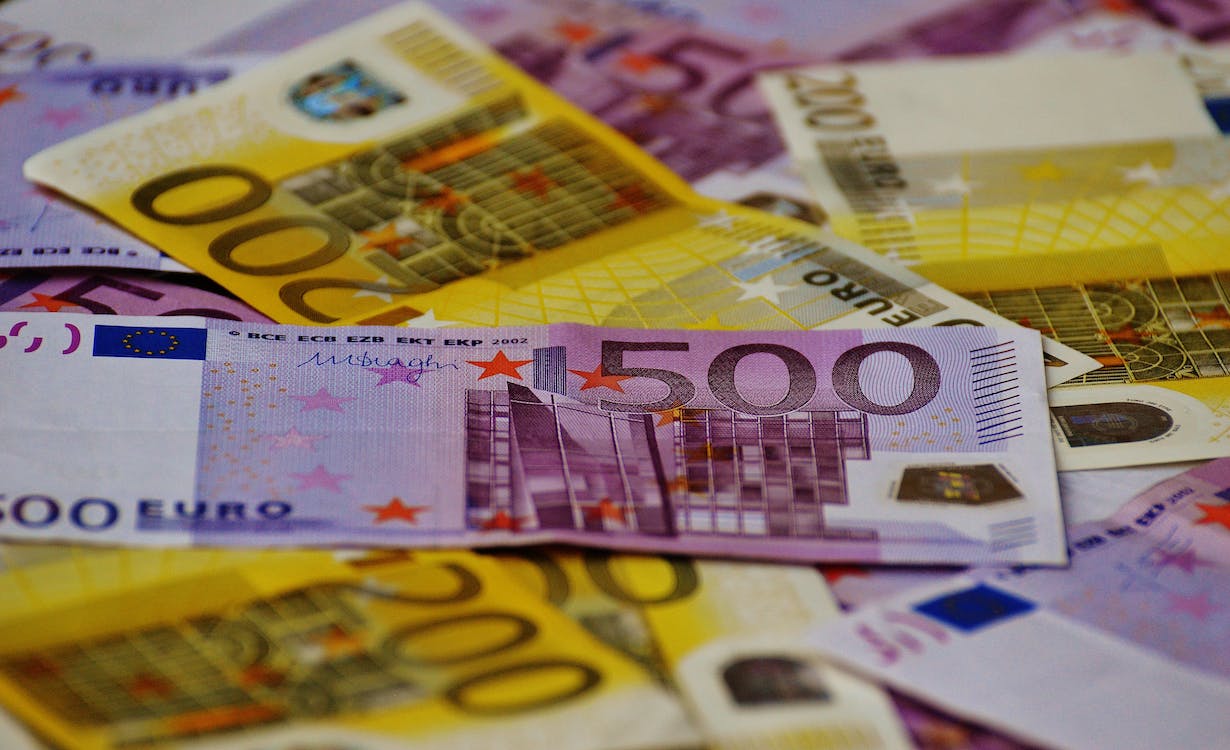
The collective military might, coupled with the trade prowess, has given the European Union a higher degree of power. Three decades after the Single Market came into operation it is relevant to question whether trade ensured the inclusion of power into the equation, especially in light of the strength of the currency of the EU, and its financial markets. A currency of several European member states used by approximately 340 million people daily, is today the second most widely used currency globally, with 60 partner countries or territories also using the currency in some form.

The 69th plenary meeting of the Conference of Parliamentary Committees for Union Affairs (COSAC) is due to convene in Sweden next week. A background note for the session on the Single Market has been circulated prior to the meeting. It claims that “Over the last three decades, the single market has promoted healthy competition and created strong economies and industries across the continent. The removal of barriers for goods, services, capital and people has given us both better companies and more thriving countries, and has provided consumers with higher quality products at better prices. The single market also makes it easier to travel, study, work, live and retire in other member states…. The single market also contributes to the Union’s unique peace project as it has generated increased trade, closer contacts and greater mobility within the Union.”

Trade transposed a region that fought two world wars in the short span of two decades, and has managed to remain relatively peaceful and devoid of conflict for over seven decades. It is granted that challenges remain deeply entrenched, and much doubt is raised over collective action, but it is also true that the European model of integration remains unique and in a league of its own, well ahead of the rest. Davies’ claim remains accurate as the progress “is far more easily described than explained.”


Saturday, July 2, 2022

RUSSIA OVERSHADOWS G7 2022 SUMMIT

GUEST COMMENTARY by Banura Nandathilake


Despite being an informal collective of ‘advanced economic’ liberal democratic states, the Group of 7 (G7) bringing together Canada, France, Germany, Italy, Japan and the United Kingdom and the United States have fervent goals. Held from 26 to 28 June 2022, the summit was in response to a global society capsized by division and shocks, as a call to unite and join to defend ‘universal human rights and democratic values, the rules-based multilateral order, and the resilience of democratic societies’ (G7, 2022). The viability of such remains to be seen.

Formed in 1975, leading states in a world of global economic recession induced by the OPEC oil embargo understood it may be in their mutual interest to coordinate on macroeconomic interdependencies. While it was first a forum for Finance ministers to hold annual meetings, the G7 developed into a round-table between leaders of the Western World. In 1988, Russia joined the G7, which was then named the G8 albeit temporarily until Russia’s dismissal for its annexation of Crimea from Ukraine.

The G7 states in the contemporary, with an aggregate that represents 45 percent of the global economy in nominal terms and 10% of the world’s population, hold annual summits to coordinate economic policy goals, facilitate collective action on transnational issues and propagate neo liberal norms, in conjunction with the European Union and other invitees. All 7 member states are identified as mature and advanced democracies with a Human Development Index score of 0.800 or higher.

Unlike international organisations and groups such as NATO, the G7 group has no formal legal existence, no permanent secretariat or official members. It thus has no legally binding rules that abide by or ratify states to uphold decisions and commitments made at G7 meetings. As such, while compliance with G7 norms is procedurally voluntary, they are impacted by social norms of persuasion, influence, mutual accountability and reputation. Topics of conversation between member states have encompassed growing challenges such as counterterrorism, development, education, health, human rights and climate change.

The 2022 Summit

From 26-28 June 2022, the leaders of G7 States met in Elmau, Germany joined by the leaders of Argentina, India, Indonesia, Senegal and South Africa, as well as Ukraine. Representatives included German Chancellor Olaf Scholz, Italian Prime Minister Mario Draghi, US President Joe Biden, British Prime Minister Boris Johnson, Canadian Prime Minister Justin Trudeau, Japanese Prime Minister Fumio Kishida, French President Emmanuel Macron, European Council President Charles Michel and European Commission President Ursula von der Leyen,

The summit focused on the Covid-19 crisis, climate change, the Russian Ukrainian conflict, and China. 

Climate Change

The shared concerns of climate change were a major topic of discussion during the 2022 Summit. The group endorsed the goals of an open and cooperative international Climate Club, in alignment with the 1.5°C pathways and hastened the implementation of the Paris agreement. The group further pledged to commit to a decarbonised transportation sector by 2030, a fully or predominantly decarbonised power sector by 2035. However, the latter may have been incentivised by political concerns of Western states to a major degree.

Liberal Democracies of the West

Liberal democracies may be understood to exist where the state subscribes to a liberal economic system and a democratic political system. A concise summary of such is as a liberal economic system proscribes significant political control over an decentralised, capitalistic, market driven economic system, as it is understood that the market mechanism is the most efficient means of linking demand to supply, market to consumer. A democracy may be understood as a domestic political model which, in conjunction with an impartial judiciary, free media and others, elected representatives aim to promote a decentralised representative governance through accountable, transparent and inclusive institutions.

By virtue of being a liberal democracy, all member states find common ground, parallel norms, alignment of macro foreign policy goals and understanding with each other. This allows the informal G7 to coordinate hard power security and economic interdependence in addition to cooperating with civil society groups to promote human rights, and uphold a democratic zone of peace in the face of non-democratic powers. A strong culture of mutual accountability exists between G7 states. Accountability may be through internal processors of the forum, where social norms allow for persuasion and disincentivize coercion. Coercion may not at all be necessary, as liberal democratic states would all be of a positive sum world view. Furthermore, the level of trade interdependence between states would act as means of checks and balances, as every state is needed by the other, thus it is in every G7 state’s interest to be in their good books.

The Illiberal Rest

Russia and China, in addition to states such as Iran, Saudi Arabia and Venezuela are understood by the West to be illiberal states. Both major powers, albeit one a receding power, have capitalist and liberal economic systems where the state’s political machine exerts a heavy pressure on the market mechanism. While the state may be able to provide a higher quality safety net to its citizens by restraining the destructive forces of capitalism to better allocate scarce resources amongst the vulnerable, significant barriers to such exist. China’s GDP has grown at a surprising rate vis a vis other developing states, which has allowed the CCP significant geopolitical leverage. However, China’s domestic political model is authoritarian, whereby citizens do not have much say in how they are governed. Exclusive political institutions have no means of accountability or transparency, which leads to significant corruption. As Wedeman (2004) analyses, corruption is a feature of the Chinese system, thereby stifling economic and social growth. Corruption and lack of domestic checks and balances to those in power may be more apparent in Russia than China, where the control of the Kremlin and the Oligarchs have poignant effects on not just its citizens but also its neighbours; as the lack of domestic accountability may mean the lack of stringent checks balances, which then mean lesser shackles on the zero-sum ambitions.

Russia-Ukraine Conflict

The Russia-Ukraine conflict may be interpreted as a conflict between the forces of liberal democratic values of positive peace, pluralism and self-determination versus a one man’s nostalgic dreams of a ‘Neo’ USSR. Being at complete odds, the reaffirmed condemnation of Russia’s ‘’illegal and unjustifiable war of aggression against Ukraine’’ by the liberal democratic G7 states is hardly a surprise. Nor is their promise of ‘’needed financial, humanitarian, military, and diplomatic support’’ for Ukraine in its defence of its sovereignty, during its path on a free and democratic society.

The Sanctions Regime

Sanctions and more sanctions were promised by the group of seven advanced economies, who vowed to “align and expand targeted sanctions to further restrict Russia’’ in its access to key technological industrial imports and services. Such a move would severely restrict the ability to sustain their war machine thereby adhering to security commitments to Ukraine. The G7 Leaders pledged new sanctions on Russians who had committed war crimes in Ukraine, and are contributing to exacerbating “global food insecurity” by “stealing and exporting Ukrainian grain”. New penalties on Russian gold exports were further proposed, as well as a cap on the oil price to phase out global dependency on Russian energy.

However, a complete restriction of the import of Russian energy may be an ambitious task. European nations such as France get a quarter of their oil and 40% of their gas from Russia. While Germany has halted the progress of the controversial Nord Stream 2 pipeline, the EU has currently agreed to reduce its Russian gas imports by only two-thirds. President Biden however is banning all Russian oil and gas imports to the US, and the UK is ready to phase out Russian oil by the end of the year. The US, UK and Ukrainian Leaders are keen for other G7 nations to follow suit.

Ukraine's President Volodymyr Zelenskyy, who joined in on a trio of meetings via Videolink, stated that the summit will show "who is our friend, who is our partner and who sold us out and betrayed us". He reiterated his calls for fresh deliveries of weaponry, as he believes Russia will want to extend the war until winter wherein they could make new territorial gains to consolidate power. The financial support of G7 allies in 2022 already amounts to more than USD 2.8 billion in humanitarian aid, and a further USD 29.5 billion is pledged in supporting Ukrainian reconstruction.

China and the BRI

A growing China poses a “threefold threat” to G7 countries — economically, ideologically, and geopolitically. China’s GDP is second only to the US and it is fast catching up. China’s growing state-overseen tech industry, fuelled by globalisation and interdependence, is fast spreading a culture of surveillance and censorship, which act as means for the globalisation of authoritarianism. Said authoritarian ideals are further spread through Chinese geopolitical projects and alliances such as the BRI, which usually focus on developing, quasi democratic states with little to no accountability such as those in Africa and Central Asia. Furthermore, China’s action with regard to the Uyghurs in the Xinjiang region and its influence in Hong Kong have drawn condemnation from G7 members. China’s growing trade and defence ties with Russia have also caused concerns.

A Western Counter to the BRI

A Western counter to the BRI emerged during the G7 summit, aptly named Partnership for Global Infrastructure and Investment. The BRI is a global infrastructure development strategy which was developed as per Chinese leader Xi Jinping's vision in 2013, as a means for China to assume a greater role in global politics by easing access to China and its capabilities and boosting global GDP. Dubbed the Belt and Road Initiative and with over 145 countries signed up, the BRI is currently constructing a network of overland routes, rail transportation, sea lanes and energy pipelines to connect China to Southeast Asia, Central and South Asia, the Middle East, Europe and Africa. However, the project has been criticised as a tool to increase China’s political leverage in developing countries. Thereby, the BRI has been criticised for neocolonialism, economic imperialism.

In such a context, the G7 had launched a $600bn Build Back Better World (B3W) initiative infrastructure plan to counter China, in private and public funds to finance infrastructure in developing low and middle-income countries over five years. By working to narrow the global investment gap, the B3W would create new Just Energy Transition Partnerships with Indonesia, India, Senegal and Vietnam, building on existing partnerships with South Africa.

While US President Biden understood that “Developing countries often lack the essential infrastructure to help navigate global shocks (thus) feel the impacts … and they have a harder time recovering,” he stressed that the B3W “isn’t aid or charity. It’s an investment that will deliver returns for everyone”. Despite being dwarfed in comparison to the multi-trillion-dollar BRI, the B3W offers means of accountability, transparency and mutual trust between the neo liberal developed states and the developing states. The initiative would, according to Biden, further allow developing states to “see the concrete benefits of partnering with democracies”. While a cynic may argue that the developed have no interest in the developing other than exploitation and/or self-interest, and such may be observed to be true, President Biden may have been right when he said that underdevelopment is “not just a humanitarian concern, but an economic and a security concern for all”.


Mutual gains depend on interdependence, and without developing countries, there cannot be any sustainable recovery of the world economy. However, the development of low-income states is necessary but insufficient for a holistic global economic recovery, which remains shadowed by the conflict of value systems: liberal and illiberal, democratic and authoritarian.